

Why Smart Paris Owners Document Everything Before Starting A Major Renovation

A bailiff’s certification can protect you from neighbor disputes before the first hammer falls on your renovation project. Jérôme Cacarié explains.
I’ve lost count of how many times I’ve watched clients’ excitement over their Paris renovation plans—the marble countertops they’ve sourced, the herringbone floors they’re dreaming about—only to see their faces fall when I mention the constat d’huissier. “Do we really need that?” they ask. In over 20 years helping buyers navigate Paris real estate, this question usually comes from people who haven’t yet experienced a French neighbor dispute. Those who have? They don’t ask.
Let me tell you why I now insist on bailiff certifications before any major renovation work begins. First, a story.

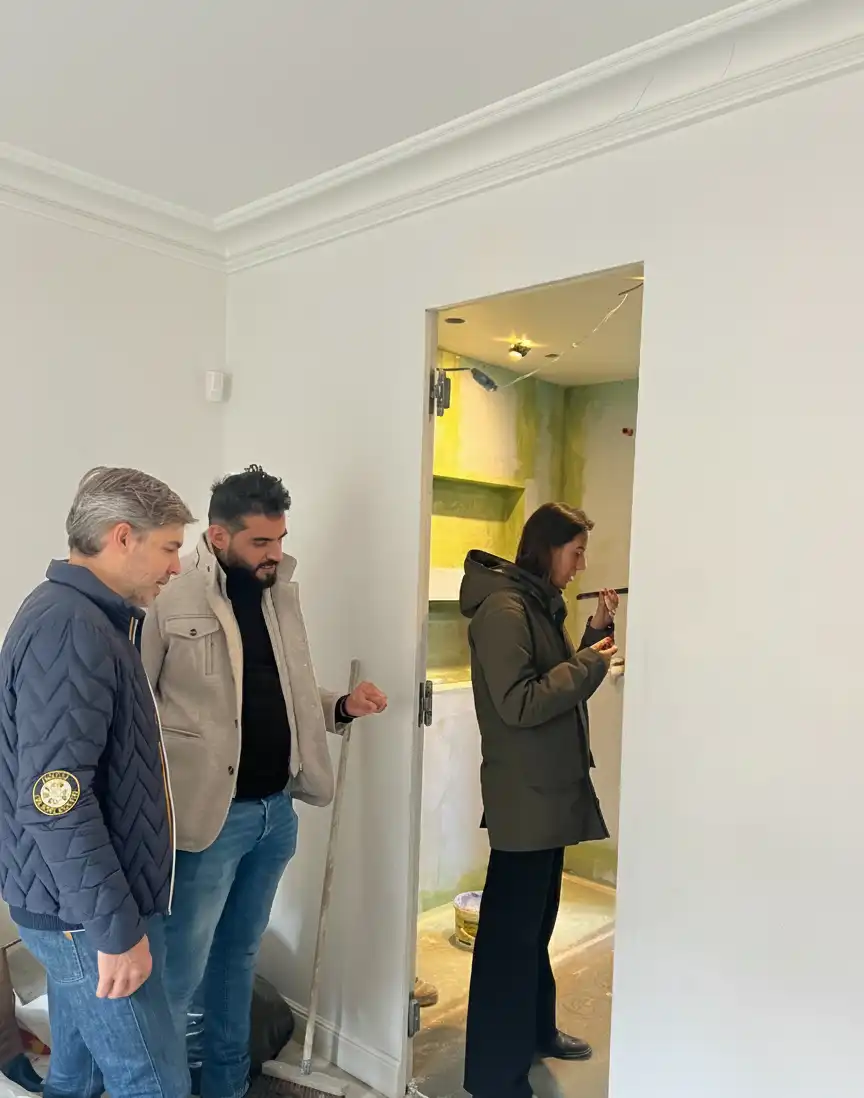
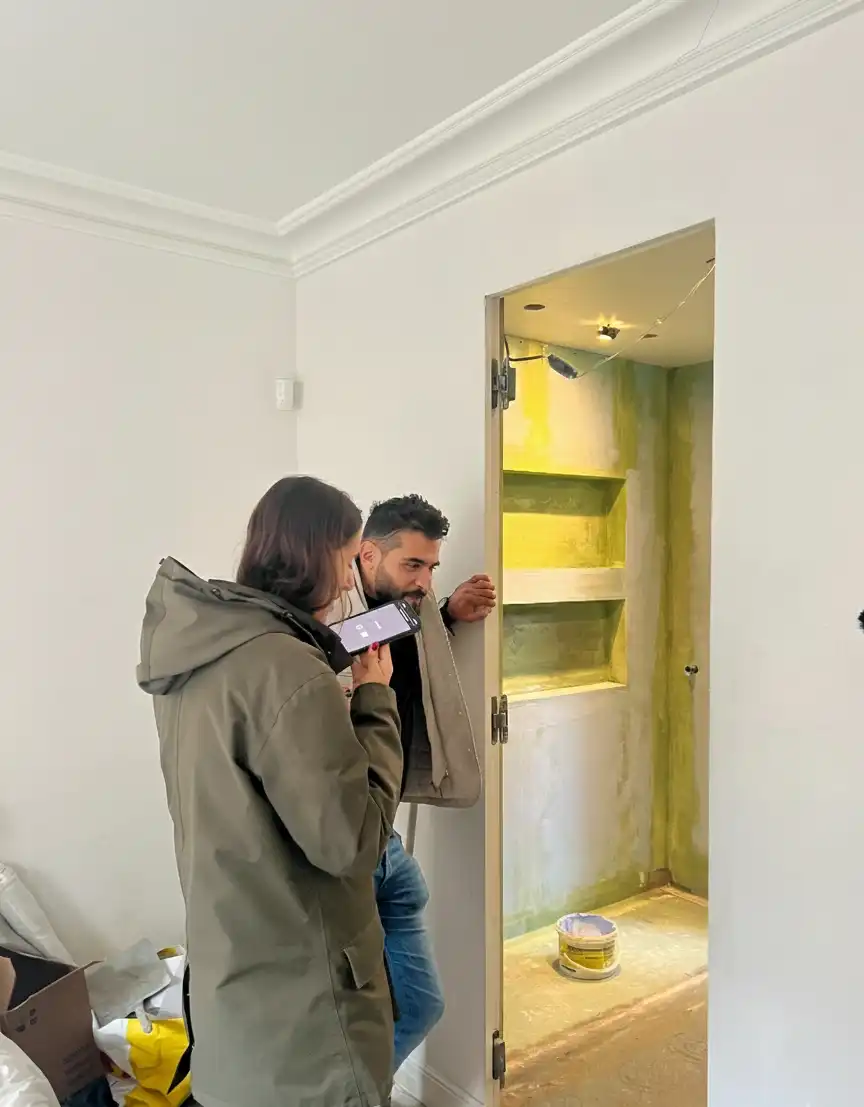
Walking through the renovation with the Bailiff and the General Contractor.
The Rue de Montessuy Lesson
A few years ago, our client was renovating an apartment on the rue de Montessuy, steps from the Eiffel Tower in the 7th arrondissement. Beautiful building, classic Haussmannian architecture. I didn’t push hard about getting the bailiff certification beforehand. The client was eager to start, the architect had timelines, and it was brushed off as just one more bureaucratic hurdle.
To get up to the worksite, the construction team used the building’s common elevator to transport materials—completely normal, completely necessary. But soon, contractors coming and going unnerved the other residents of this prestige building. By the time the renovation wrapped up six months later, the neighbors had convinced themselves—and each other—that the workers had destroyed the elevator’s interior.
At the next general assembly meeting, the co-owners voted to charge my client over 3,000 euros to completely redo the elevator cabin. I knew that elevator. The wear they were complaining about had accumulated over years – probably decades. But my client had no way to prove it. No documentation, no photographs, no neutral third party who could testify to what existed before the first hammer fell.
That’s when I made bailiff certifications non-negotiable for my clients.
How the Bailiff Report Protects You
Here’s what I’ve learned about Paris renovations: it’s not the work itself that creates problems—it’s the fear of the work. Haussmannian buildings have shared walls, aging infrastructure, and decades of minor accumulated damage that nobody notices until contractors arrive to start work in one of the apartments. Soon after, every crack becomes suspicious.
Many times, renovation work genuinely affects neighboring properties. Vibrations from demolition might worsen existing cracks. Plumbing work can reveal water damage in the apartment below that’s been there for years. Without documentation of the starting condition, you’re in an impossible position when neighbors start pointing fingers.
The constat d’huissier—a formal certification by a French bailiff—creates what I think of as an insurance policy against accusations. It establishes exactly what existed before your contractor arrived, transforming what could become a he-said-she-said contest into documented fact.
With the passing of the Béteille law of 2010, these bailiff reports carry virtually incontestable weight in French courts. The bailiff, known as a commissaire de justice or huissier de justice, serves as a neutral public official with specialized training in property law. Their documentation creates what French legal professionals call a “photographie juridique“—a legal snapshot frozen in time.
What Actually Happens During the Inspection
When I coordinate a bailiff certification for a client, I make sure it covers more than just the apartment being renovated. A thorough job includes the adjacent apartments, common areas like hallways and staircases where workers will pass with equipment, and often the apartments directly above and below.
The bailiff photographs everything: existing cracks, water stains, imperfections in walls and ceilings. They measure, note, and document every visible issue. I’ve stood through dozens of these inspections, and I’m always impressed by how thorough they are. Nothing escapes their attention.
This comprehensive approach protects you from claims about damage to shared walls, floors affected by vibration, or deterioration of common areas. The resulting report becomes part of the official record, complete with detailed descriptions and photographic evidence that hold up in court.
The Post-Renovation Certification Nobody Thinks About
Here’s something I wish more people understood: bailiff certification proves equally valuable after renovation work is complete, though for different reasons.
French law provides a ten-year statute of limitations on building regulation complaints. If no neighbor or co-owner raises an objection within that decade, the issue becomes legally moot. But that protection only applies if the clock actually starts ticking.
A post-renovation bailiff visit documenting your installations—air conditioning units, mechanical toilets, structural modifications like wall openings—thus establishing the decisive date that starts the ten-year period. Without this formal certification, you can be vulnerable to complaints years later, with no clear proof of when the work was completed.
Who Really Needs This Protection?
Honestly? Everyone undertaking significant renovation work benefits from pre-work certification. But certain situations make it practically essential.
Any structural work involving load-bearing walls makes certification something I won’t let my clients skip. Projects in older buildings with multiple owners sharing walls and systems face the highest risk of disputes. If you’re buying an apartment in tired or poor condition, documenting the property’s current state can also be useful for offsetting taxes on future capital gains. We are just wrapping up a primary bath redo in an elegant 3-bedroom fractional ownership apartment that we manage in Saint Germain des Pres, required because the bathroom floor was not entirely waterproofed when the works were done 15+ years ago. We paused the renovation when the waterproofing was complete and before they laid the floor, to prevent any future dispute about whether this important step was done.
The certification typically costs between 600 and 900 euros, depending on scope. Many architects and contractors we work with now require this step before beginning work. We all agree that the modest upfront cost avoids far more costly disputes later.
My Bottom Line
In a city where buildings often predate modern construction standards and neighbors share centuries-old walls, clarity is invaluable. The bailiff’s report is more than bureaucratic formality; it’s a shield against the unknown, a way to begin your renovation with confidence that the starting line is clearly marked. The rue de Montessuy elevator taught me that lesson. I make sure our clients don’t have to learn it the expensive way.
Paris Property Group offers comprehensive property caretaking services to ensure your investment is well-maintained, from coordinating building management needs to handling utility accounts and arranging ongoing maintenance whether you’re in residence or abroad. Learn more about how we can help protect and manage your Paris property.
Social Cookies
Social Cookies are used to enable you to share pages and content you find interesting throughout the website through third-party social networking or other websites (including, potentially for advertising purposes related to social networking).