

Exploring Petit-Montrouge: The History of the Neighborhood in 3 Emblematic Sites

The Petit-Montrouge borough, nestled within the 14th Arrondissement, offers a rare glimpse into a Paris that feels more like a collection of villages than a uniform metropolis. It takes its name from the neighboring commune of Montrouge, of which it was an integral part before its official annexation by the city of Paris in 1860.
For the discerning real estate enthusiast, Petit-Montrouge is a treasure trove. It boasts architectural features that are quintessentially “South Paris”—largely unaffected by the rigid uniformity of Haussmannian-style boulevards. Instead, the area is defined by its charming individual houses, hidden villas, and quiet mews. More commonly known today as the “Alésia neighborhood,” this pocket of the Left Bank is a masterclass in urban history and residential appeal.
1. Le Village d’Orléans: The Original Residential Escape
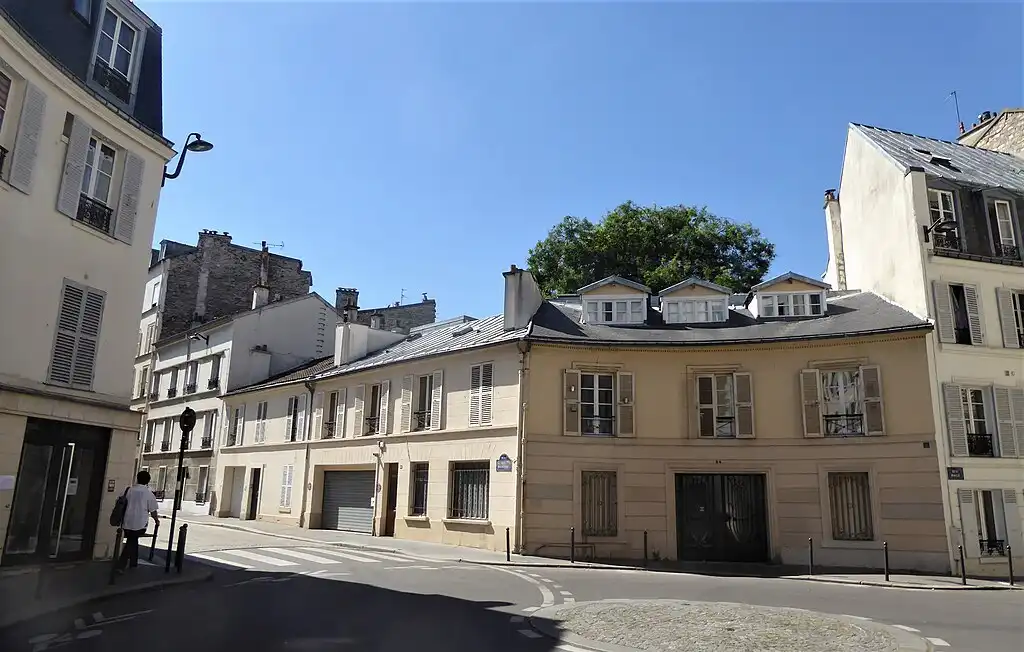
In 1826, long before the city’s limits reached this far south, the Javal Frères company acquired a plot of land known as “le Clos des Catacombes.” Their vision was to create a subdivision of low-rise houses with lush gardens in the back.
Named the Village d’Orléans, this corner of Petit-Montrouge was designed specifically for a bourgeois population seeking refuge from the density and noise of central Paris. To maintain its prestige, strict interior regulations prohibited noisy industrial businesses and “disreputable” activities.
The legacy of this “village” remains visible today. The former town hall of Petit-Montrouge at Place Michel Audiard still stands as a testament to the area’s independent past. Nearby, the Villa Hallé serves as a reminder of the private exits built for the village’s original inhabitants.
2. La Villa Adrienne: Art Nouveau Elegance in Petit-Montrouge
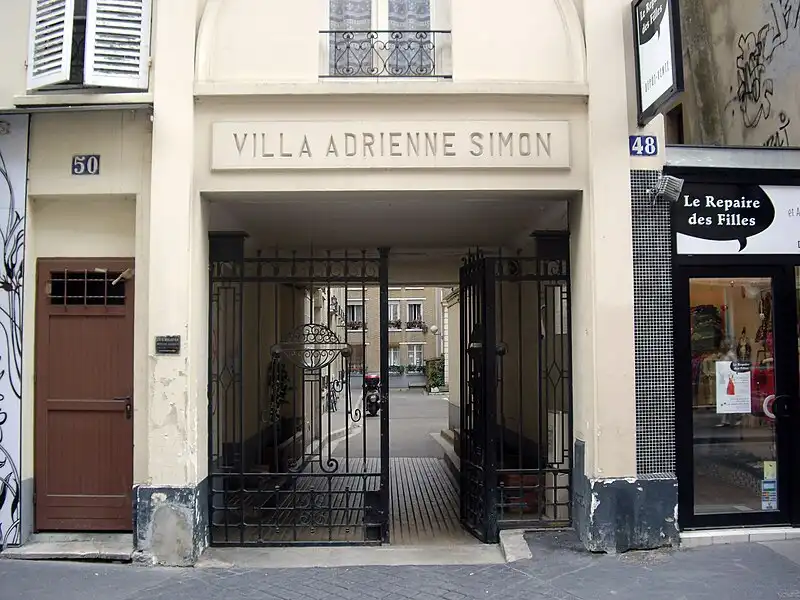
Hidden behind the bustling Avenue du Général Leclerc lies one of the most coveted residential enclaves in the 14th Arrondissement: La Villa Adrienne.
Originally part of an estate belonging to the Duke of Vallière (the great-nephew of Louis XIV’s famous mistress), the land was purchased in 1895 by Adrienne Desmond. She commissioned a grand, rectangular complex centered around a 3,500 $m^2$ garden courtyard—a true “secret garden” in the heart of the city.
The brick and stone façades of Villa Adrienne echo the nascent Art Nouveau movement, offering a distinct aesthetic contrast to the gray limestone seen elsewhere in Paris. Each staircase is named after a titan of French culture—La Fontaine, Molière, Racine, and Berlioz—reflecting the neighborhood’s long-standing connection to the intellectual and scientific elite.
3. L’Hôpital de la Rochefoucauld and the Medici Legacy
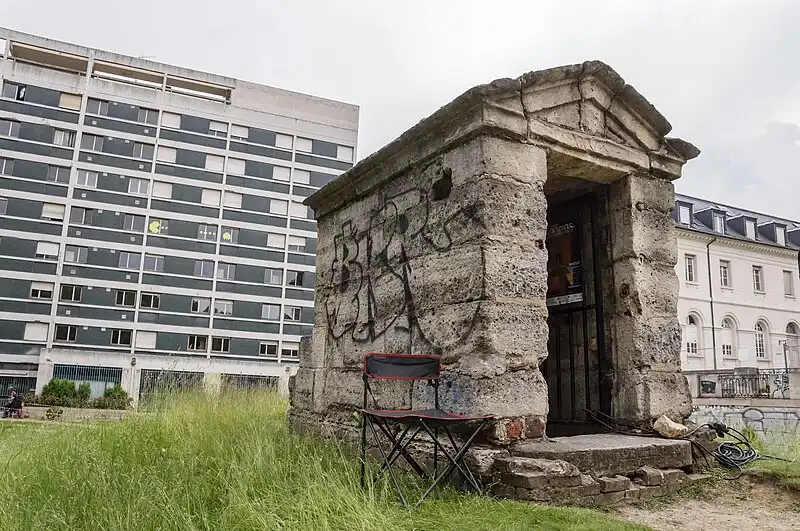
At the southern edge of Petit-Montrouge stands the Hôpital de la Rochefoucauld. Founded in 1780 by Louis XVI, it was originally a “royal house of health” for soldiers and clergy.
Beyond its medical history, the site holds a vital architectural secret: the Regard de Saux. This structure is part of the Médicis aqueduct system, commissioned in 1623 by Queen Marie de Medici to bring fresh drinking water to her palace and the city.
The existence of these subterranean connections adds a layer of historical depth to the Petit-Montrouge real estate market. Owning property here isn’t just about the square footage; it’s about being situated atop centuries of Parisian infrastructure that once served royalty.
Did You Know?
Petit-Montrouge is home to one of the highest concentrations of “Atelier” style apartments in Paris. Unlike the grand apartments of the 8th or 16th arrondissements, these were originally designed as light-filled studios for artists and sculptors who flocked to the 14th arrondissement during the “Années Folles” (the Roaring Twenties). Today, these north-facing glass walls and double-height ceilings are among the most sought-after features in the Parisian luxury property market.
Real Estate Perspective
The Petit-Montrouge neighborhood remains a favorite for families and investors alike due to its human-scale architecture and vibrant market life. If you are interested in acquiring a piece of this history, Paris Property Group can guide you through the nuances of the 14th arrondissement.
Source:L’histoire du quartier du Petit-Montrouge en 3 lieux
Cover Photo: flickr – Jean-François Gornet, Villa Hallé (2), Paris XIVe. (CC BY-SA 2.0)
Contact Paris Property Group to learn more about buying or selling property in Paris.
Social Cookies
Social Cookies are used to enable you to share pages and content you find interesting throughout the website through third-party social networking or other websites (including, potentially for advertising purposes related to social networking).