

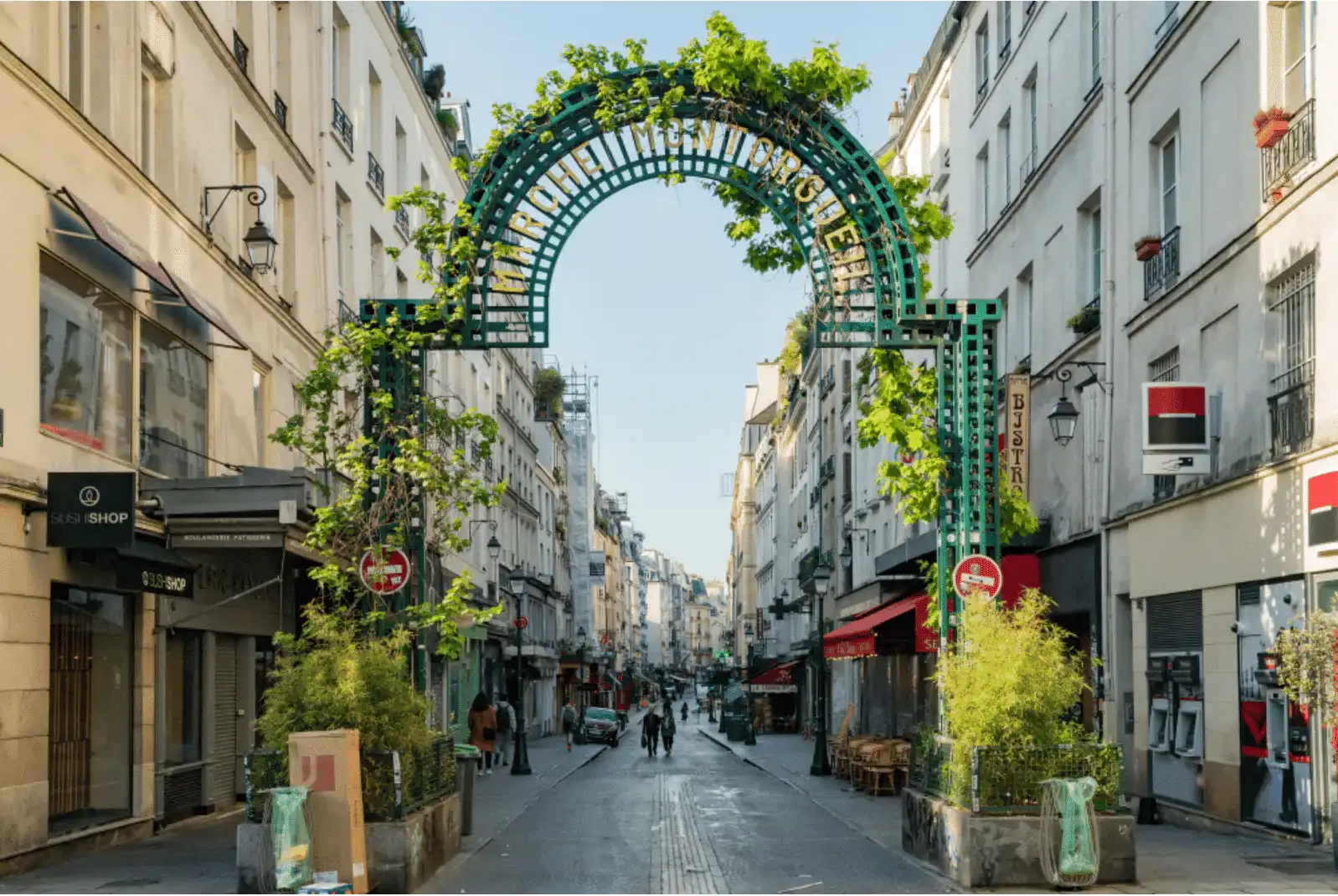
Stepping onto la rue Montorgueil is like walking through a living tapestry of Parisian history. Located in the heart of the 1st and 2nd Arrondissements, this pedestrianized thoroughfare remains one of the city’s oldest and most vibrant market streets. For luxury property seekers and history enthusiasts alike, the “Montorgueil marble” cobblestones lead to a world of artisanal bakeries, historic cafes, and some of the most sought-after real estate in Paris. From its medieval roots to its status as a premier culinary landmark, discover why this street remains the pulsing heart of the Right Bank’s social fabric.
The Medieval Origins of La Rue Montorgueil
La rue Montorgueil has always been a very lively place of passage. From the middle of the 17th century onwards, it welcomed fishermen from the north of France who brought their cargo through the Porte Poissonnière.
Constantly bustling and noisy, the street was located near the “Great Court of Miracles.” In medieval times, this made it a place where it was not safe to walk late at night, as it was famously frequented by the city’s outcasts and beggars. Today, that grit has been replaced by glamour, but the medieval layout remains, offering a unique architectural footprint for those investing in Paris real estate.
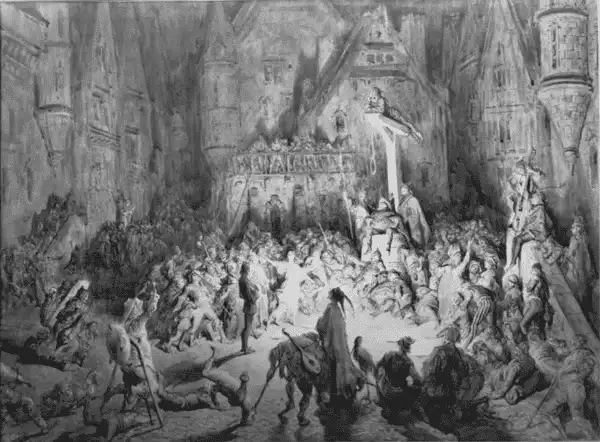
The Court of Miracles by Gustave Doré, illustration of the romantic-medieval vision depicted in Notre-Dame de Paris by Victor Hugo.
Iconic Landmarks and Dining on La Rue Montorgueil
The Stohrer Pastry Shop
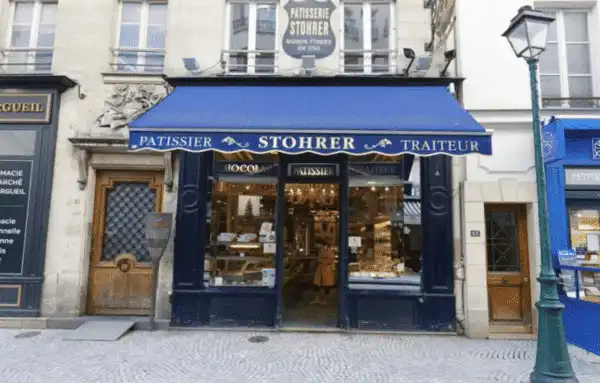
Due to its age, la rue Montorgueil has hosted many historical sites. The most famous is undoubtedly the Pâtisserie Stohrer. Founded in 1730, it is the oldest pastry shop in Paris.
The shop’s founder, Nicolas Stohrer, was the pastry chef for Princess Marie Leszczynska, daughter of King Stanislas I of Poland. When she married King Louis XV, Stohrer followed her to Paris and settled on the street to introduce Polish specialties to the French. He is credited with inventing the Baba au Rhum, a dessert legend says was named “Ali-Baba” after the King’s favorite book, The Thousand and One Nights.
L’Escargot de Montorgueil
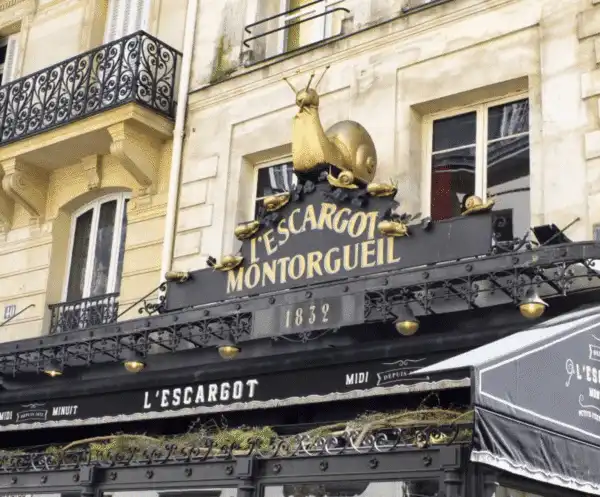
Opening its doors in 1832, L’Escargot de Montorgueil specializes in Burgundian cuisine. Its gold snail sign is a neighborhood landmark. Inside, the ceiling was painted by Georges Clairin and originally adorned the salon of the legendary actress Sarah Bernhardt. For nearly 200 years, it has hosted icons such as Marcel Proust, Pablo Picasso, and Charlie Chaplin.
Au Rocher de Cancale
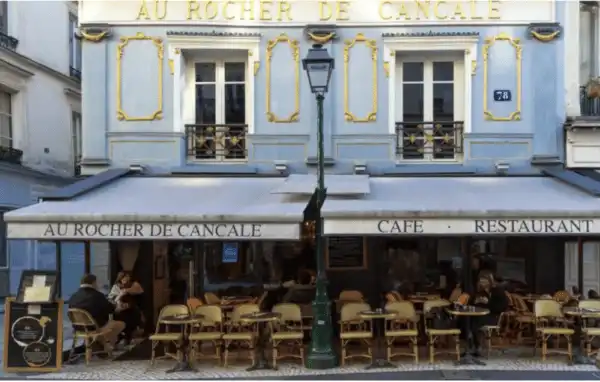
Specializing in oysters since 1804, this establishment was immortalized by Honoré de Balzac in La Comédie Humaine. It served as a frequent meeting spot for his literary characters. After a brief closure in 1846, it returned to its original location, where it continues to stand as a testament to the street’s gastronomic longevity.
The Arrest of Jean Diot and Bruno Lenoir
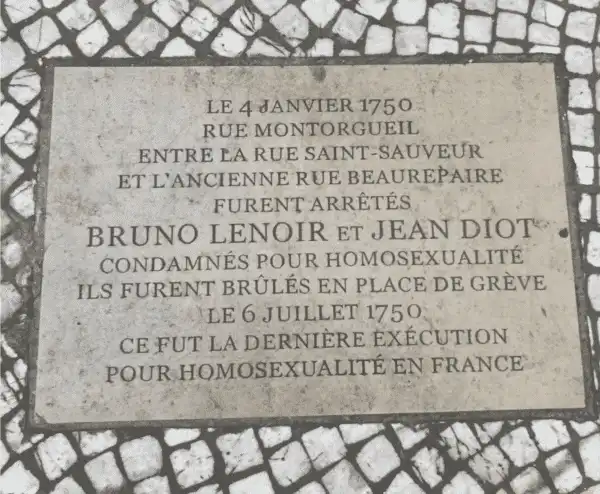
At the intersection of la rue Montorgueil and rue Bachaumont, a small plaque commemorates a somber moment in French history. On January 4, 1750, Jean Diot and Bruno Lenoir were arrested here. They became the last people in France to be executed for homosexuality. Today, they are honored as LGBT martyrs, and the plaque serves as a reminder of the street’s role in the long evolution of French civil rights.
A Street Celebrated in the Arts
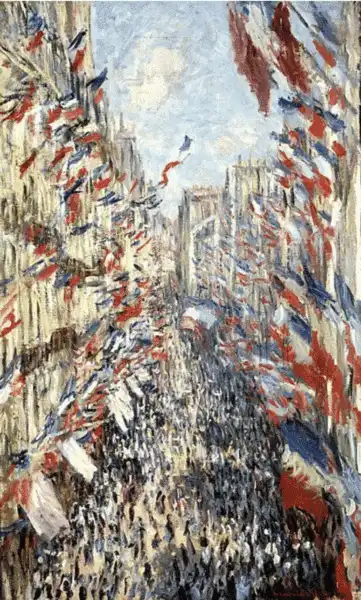
The beauty of la rue Montorgueil has inspired generations of creators:
- Literature: Beyond Balzac, Victor Hugo mentioned the street in Les Misérables, and Émile Zola described the historic inn “Le Compas d’Or” in Le Ventre de Paris.
- Impressionism: In 1878, Claude Monet painted his famous work, La Rue Montorgueil, capturing the street covered in flags for the national holiday. Monet famously asked a local resident for balcony access to capture the “crazy world” of people below incognito.
Real Estate and Culture: Living Near La Rue Montorgueil
Today, the Montorgueil “quartier” is one of the most prestigious areas for 1st arrondissement luxury apartments. As of 2026, real estate prices on la rue Montorgueil typically range from €12,000 to €15,000 per square meter, depending on the building’s historical features and views.
The appeal of the area lies in its “village” feel. Residents enjoy:
- Pedestrian Lifestyle: Most of the street is closed to cars, creating a rare quietude in central Paris.
- Market Convenience: Immediate access to world-class florists, fishmongers, and the Rue du Nil culinary hub.
- Connectivity: A short walk to the Châtelet-Les Halles hub provides unparalleled access to the rest of the city.
Whether you are looking for a historic pied-à-terre or a permanent residence, la rue Montorgueil offers a blend of 18th-century charm and modern Parisian convenience that is simply unmatched.
Original article by, Virginie Paillard posted on pariszigzag.fr
Contact Paris Property Group to learn more about buying or selling property in Paris.
Social Cookies
Social Cookies are used to enable you to share pages and content you find interesting throughout the website through third-party social networking or other websites (including, potentially for advertising purposes related to social networking).