

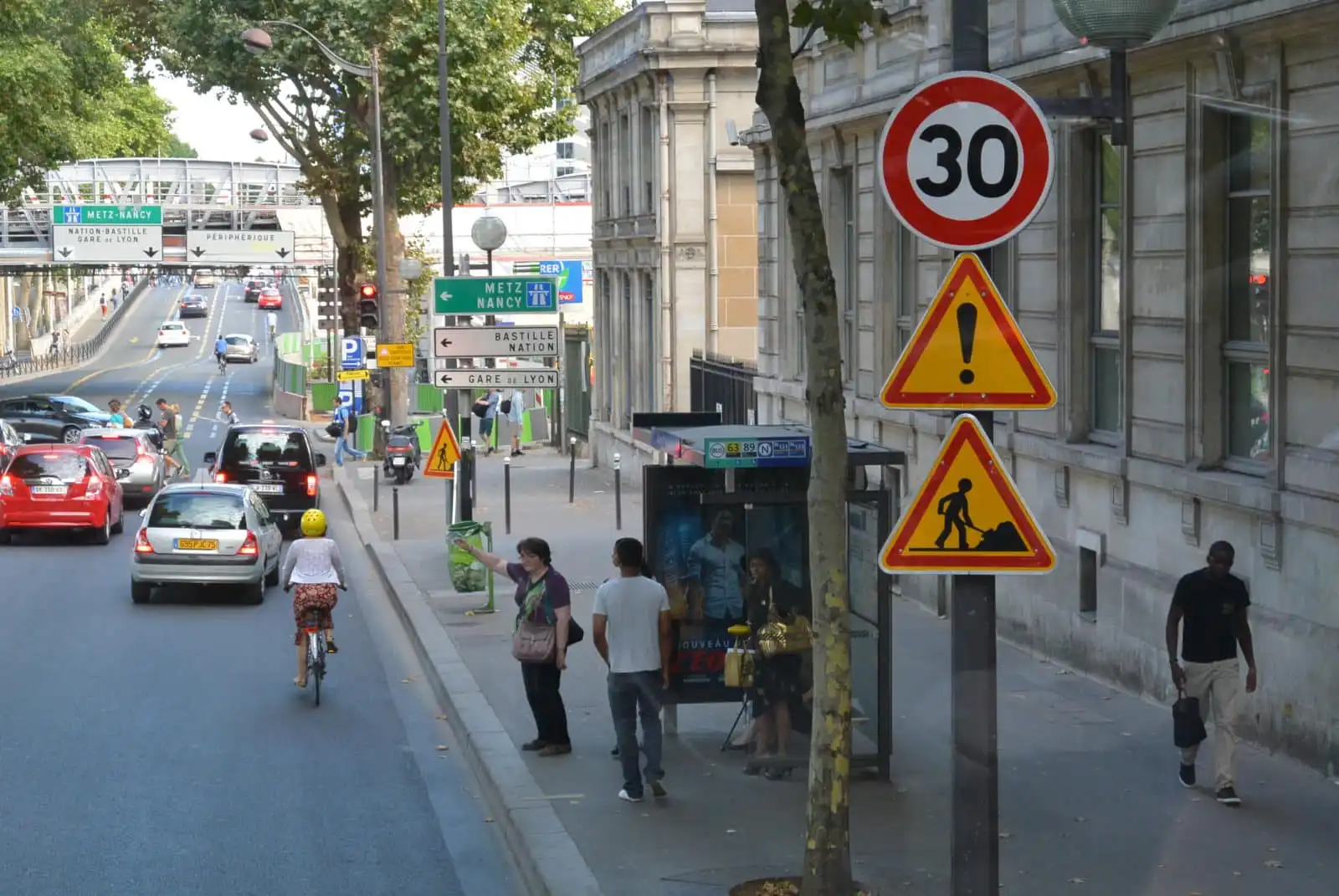
Did you know that there are effectively zero stop signs on the roads of inner Paris?
As of early 2026, the city remains a fascinating anomaly for international drivers. While Parisians have a reputation for “creative” driving, the chaos is governed by a very specific logic. Across the roughly 6,500 streets within the city limits, you won’t find a single red octagon telling you to halt. Here is what you need to know about navigating the capital today.
The Legend of the “Last Sign”
For decades, the city’s lack of stop signs was a quirky trivia point. Until about ten years ago, there was one lonely, legendary stop sign located at the exit of a building material company on Quai Saint-Exupéry in the 16th Arrondissement.
By 2016, however, the Paris Police Prefecture officially confirmed its removal. Today, the city relies entirely on traffic lights, yield signs (Cédez le passage), and the most important rule in the French handbook: Priorité à droite.
The Rule of the Road: Priorité à Droite
The explanation for the lack of signage is simple but high-stakes: The car on the right always has the priority. At any intersection without a traffic light or a specific yield line, you must give way to the vehicle entering from your right. While this may seem like a recipe for a “free-for-all,” it forces Parisian drivers to remain constantly alert.
Paris Driving in 2026: What’s Changed?
If you haven’t driven in Paris since the early 2020s, the landscape looks very different now:
- The 50 km/h Périphérique: As of late 2024, the speed limit on the famous ring road was reduced to 50 km/h to reduce noise and pollution.
- The Rise of the “Vélopolitain”: Under Mayor Anne Hidalgo’s “Plan Vélo,” over 1,000 km of permanent bike lanes now crisscross the city. In many areas, cars are the minority, and cyclists often have their own dedicated traffic signals.
- Zone de Trafic Limité (ZTL): Large swaths of the city center (Arrondissements 1–4) now restrict through-traffic, making the “no stop sign” rule moot in areas where cars are barely allowed to go.
Is it Safer?
Surprisingly, yes. Data continues to suggest that removing stop signs in favor of yield rules and lower speeds (most of Paris is a 30 km/h zone) reduces the severity of accidents. By removing the “stop-and-go” frustration, traffic flows more smoothly—even if it feels like a heart-pounding dance to the uninitiated.
Local Pro-Tip
When navigating the Arc de Triomphe (Étoile) roundabout, forget everything you know about standard circles. Here, the entering traffic has the priority. If you are already in the circle, you must yield to those merging in from the right. It’s the ultimate test of Parisian “Priorité à droite”!
Contact Paris Property Group to learn more about buying or selling property in Paris and navigating life in the world’s most beautiful (and stop-sign-free) city.
Social Cookies
Social Cookies are used to enable you to share pages and content you find interesting throughout the website through third-party social networking or other websites (including, potentially for advertising purposes related to social networking).